How to escape the vicious cycle of high-interest quick loans
💡 Quick Tip
Quick loans promise immediate liquidity but hide usurious interest rates that can trap you in an infinite debt spiral. Learn to identify abusive clauses, how to negotiate with lenders to pay only the borrowed principal, and the legal steps to reclaim your financial freedom today.
The Instant Liquidity Trap
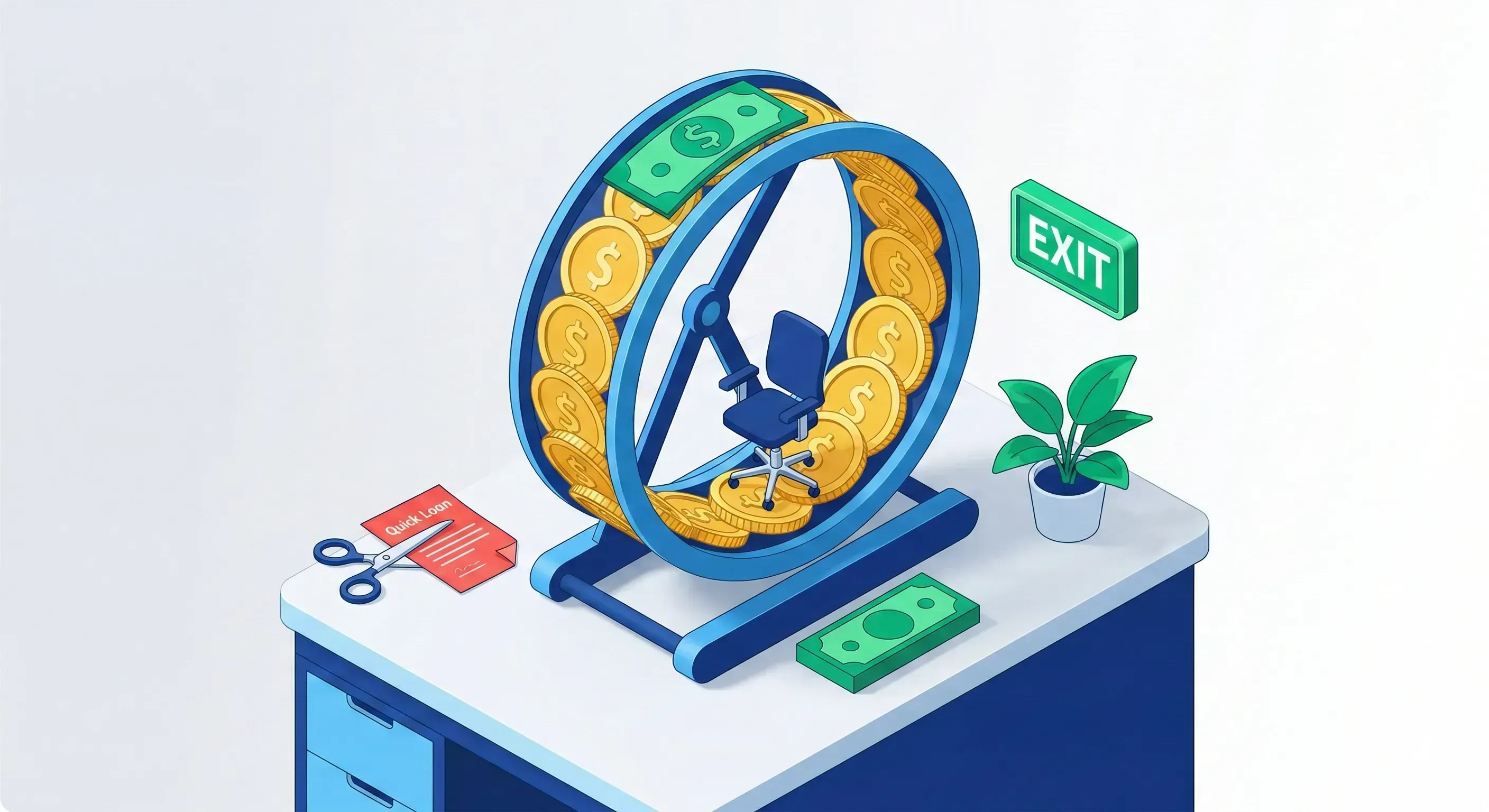
Quick loans and payday loans are designed to profit from moments of urgency. They offer money in 15 minutes, but in exchange for interest rates that can exceed 3,000% APR. The biggest danger is "debt rolling": taking a new loan to pay the previous one. This starts the vicious cycle.
Identifying Usury
In many countries, consumer protection laws exist against disproportionate interest. If your micro-loan interest is significantly higher than the standard market rate for personal loans, you may have a case of usury. Abusive interests are usually those exceeding 20-25%.
Steps to Break the Chain
- Stop borrowing: The first step is closing the tap. Don't fix a hole by digging a deeper one.
- Total inventory: List how much you owe, to whom, and at what interest.
- Negotiate a settlement: Propose paying only the principal (the money you actually received) while eliminating interest. Lenders often accept this to avoid court.
- Legal action: If they refuse, consult a specialized lawyer. Many of these contracts can be judicially annulled.
Preventative Focus
Once out, your priority should be building an emergency fund of at least $1,000. This "cushion" is the only real vaccine against the temptation of high-interest financing.
📊 Practical Example
Imagine you borrowed $500 for a car repair. The company charges 30% monthly interest. Next month you owe $650. Lacking the funds, you take another $700 loan from a different lender to pay the first. Now you owe $910. In three months, a $500 debt has turned into almost $1,200 without buying anything new. If you negotiate under usury laws, you can settle to pay only the original $500 in $50 installments. You save $700 in abusive interest you would have paid simply out of fear of collector pressure.