The 6 Jars Method: A Simple Way to Organize Your Salary
💡 Quick Tip
Organize your finances visually and effectively with T. Harv Eker's system. Learn how to distribute your income into specific percentages to cover needs, play, education, and investment, ensuring you always have money for what is important without feeling guilty about spending.
The Psychology Behind the Jars
The success of this method lies in the fact that it doesn't forbid you from spending; it tells you exactly how much you can spend. By separating money into "watertight compartments," you eliminate the uncertainty of not knowing if you will make it to the end of the month.
The 6 Magic Percentages
Divide every income you receive (salary, gifts, sales) into these six destinations:
- Necessities (55%): Rent, food, bills, and transport. This is what is essential for living.
- Long-term Savings (10%): Large future expenses, such as a house down payment, a new car, or contingencies.
- Education (10%): Books, courses, or workshops. Your most profitable asset is yourself.
- Financial Freedom / Investment (10%): Money intended to generate more money (stocks, funds, businesses). This money is never spent; it is invested.
- Play (10%): For spending without guilt! Dinners, movies, or treats. It is vital for maintaining motivation.
- Give (5%): Helping others or causes you believe in. It helps maintain an abundance mindset.
How to Implement It Today
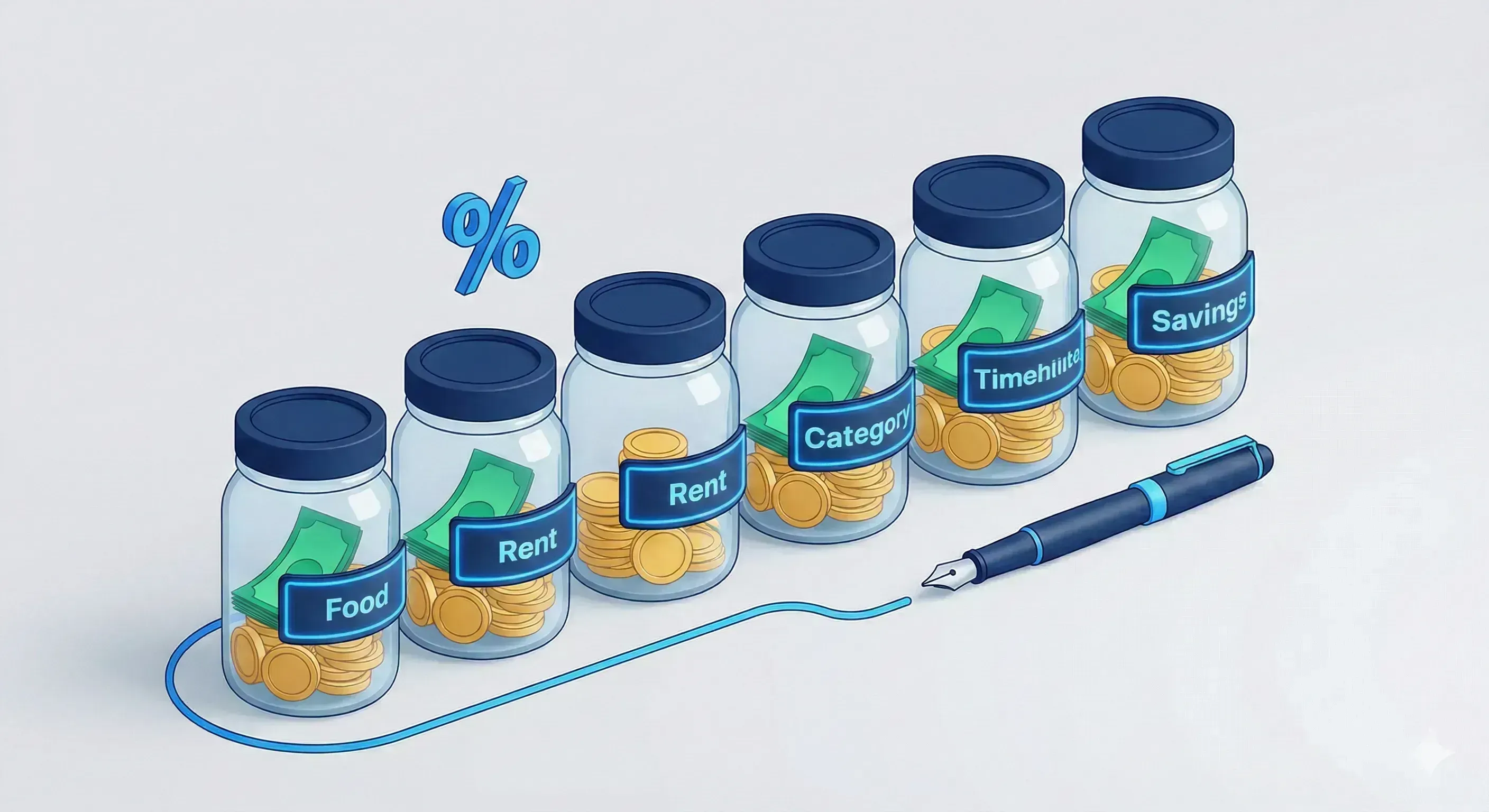
Although the name mentions "jars," you don't need physical jars. The most practical way is to use a main account for the 55% and digital sub-accounts or an Excel sheet for the rest. The key is to make the division the moment you receive your salary, not to wait until the end of the month with whatever is left.
What if My Fixed Expenses Exceed 55%?
Don't stress. If your rent and bills consume 70%, adjust the other percentages proportionally, but do not eliminate the education or investment jars, even if it's only with 1%. The goal is to create the habit of systematic distribution.
📊 Practical Example
Take a net salary of $1,500 as an example. The distribution would be: $825 for necessities (rent and food); $150 for your long-term savings jar; $150 for a course you want to take; $150 straight into an investment fund; $150 to enjoy dinners and outings without remorse; and $75 to donate or help someone. If you maintain this system for a year, you will have invested $1,800 and saved another $1,800, in addition to having enjoyed your money in a balanced and conscious way.