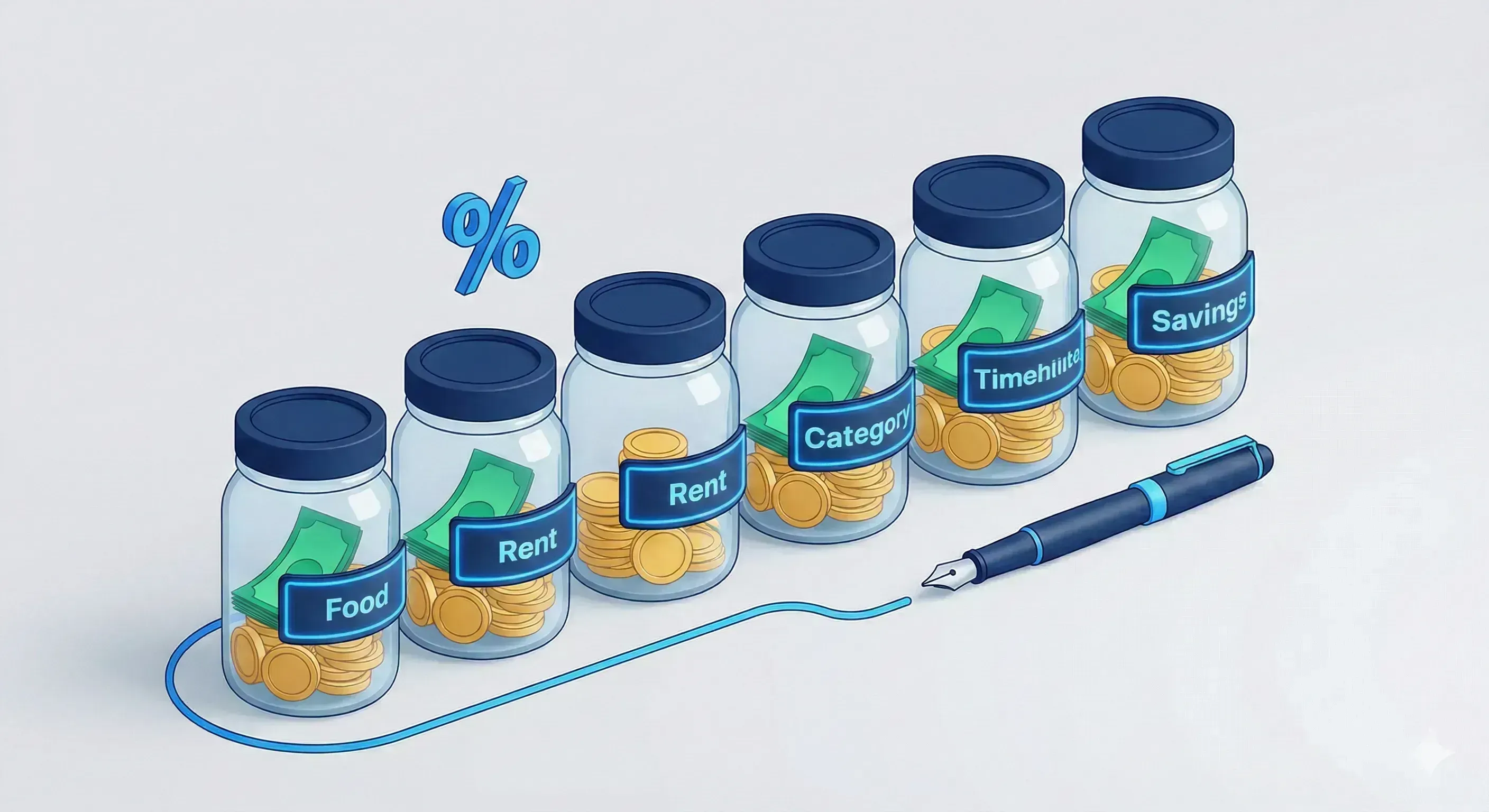
Sinking Funds: The Strategy to Anticipate Large Expenses
💡 Quick Tip
Discover how Sinking Funds can eliminate the stress of annual payments. Learn to break down major expenses like insurance, taxes, or repairs into small monthly installments so that when the time comes to pay, the money is already waiting for you.
What Exactly is a Sinking Fund?
Unlike an emergency fund, which is for the unexpected, a Sinking Fund is for what you know is going to happen. It is a specific "pot" for a future expense with a known date and amount. It is the ultimate tool to prevent your monthly budget from blowing up when the car insurance or the boiler service bill arrives.
How to Start Creating Your Funds
The success of this strategy lies in foresight. You don't need a separate bank account for each fund, although many modern apps allow for "spaces" or "pockets." What matters is the mental accounting or Excel tracking:
- Identify annual expenses: Review last year's statements. Health insurance, property taxes, annual subscriptions, Christmas gifts, or car maintenance.
- Calculate the monthly quota: Divide the total of each expense by 12. That is the amount that should leave your current account every month.
- Automate the savings: Set up an automatic transfer at the beginning of the month to your savings account dedicated to these funds.
Psychological and Financial Benefits
By using Sinking Funds, you stop seeing large expenses as financial "tragedies." They become simple procedures. Additionally, you avoid the temptation to use a credit card or drain your emergency fund for something that was entirely predictable. This keeps your financial health stable year-round, allowing you to live with a peace of mind you didn't have before.
The Difference from Traditional Saving
While general saving is often "whatever is left," a Sinking Fund is a planned expense. You are spending the money in advance in your mind, giving you real permission to use it when the time comes without feeling like you are losing your savings.
📊 Practical Example
Imagine you have three fixed annual expenses: car insurance ($480), boiler maintenance ($120), and Christmas gifts ($600). In total, that's $1,200 a year. If you don't plan, in December you might find a $600 hole that upsets your $1,500 salary. With Sinking Funds, you divide that $1,200 by 12 months, which equals $100 monthly. Each month you set aside $100; when December arrives and you need to spend $600 on gifts, you will already have them accumulated, and your monthly economy will suffer zero impact.