📂 Investing
Index Funds vs. ETFs: Which is the best option for you
💡 Quick Tip
Discover the key differences between the two star vehicles of passive investing. We analyze their taxes, fees, and operations so you can confidently choose the best fit for your long-term growth strategy.
The passive investing revolution
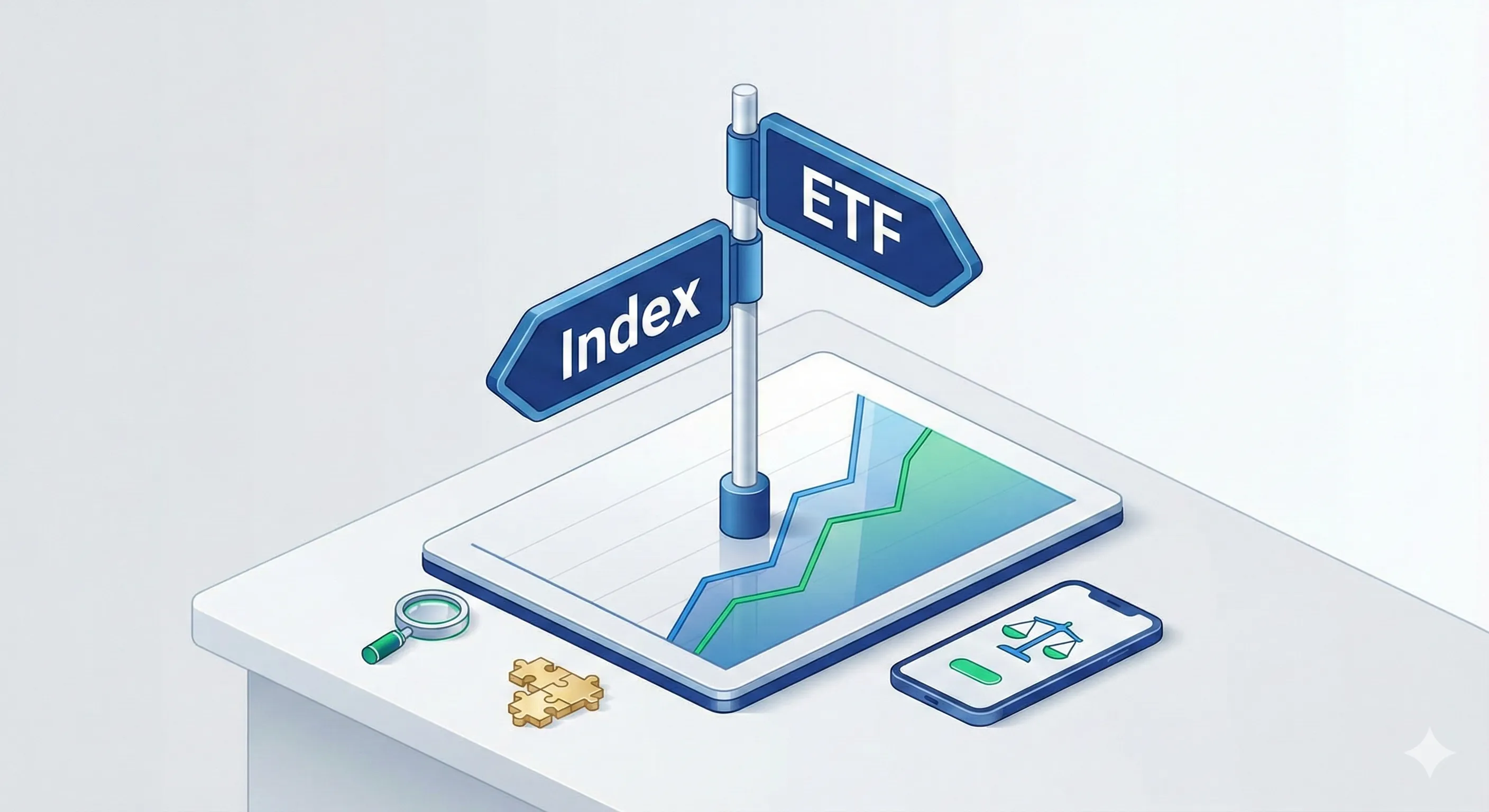
Both Index Funds and ETFs buy all the companies in an index (like the S&P 500), guaranteeing low fees and high diversification.
Fundamental differences
- Operations: An ETF trades like a stock in real-time. An Index Fund sets its price once a day at market close.
- Taxes: In some countries (like Spain), Index Funds offer tax deferral when transferring between funds. ETFs usually trigger capital gains taxes immediately upon sale.
- Fees: ETFs historically have slightly lower fees.
Which to choose?
For long-term retirement savings with monthly contributions, Index Funds are ideal for simplicity and tax advantages. For targeted sectors or real-time trading, choose ETFs.
📊 Practical Example
Practical example with real numbers
You invest €10,000. After 5 years, it grows to €15,000 (€5,000 profit). You want to switch to a European market.
- With an ETF: You sell and must pay capital gains tax (e.g., 19% = €950). You have €14,050 left to reinvest.
- With an Index Fund: You request a transfer. The full €15,000 moves to the new fund. You pay no taxes today, and those €950 keep generating compound interest for you.