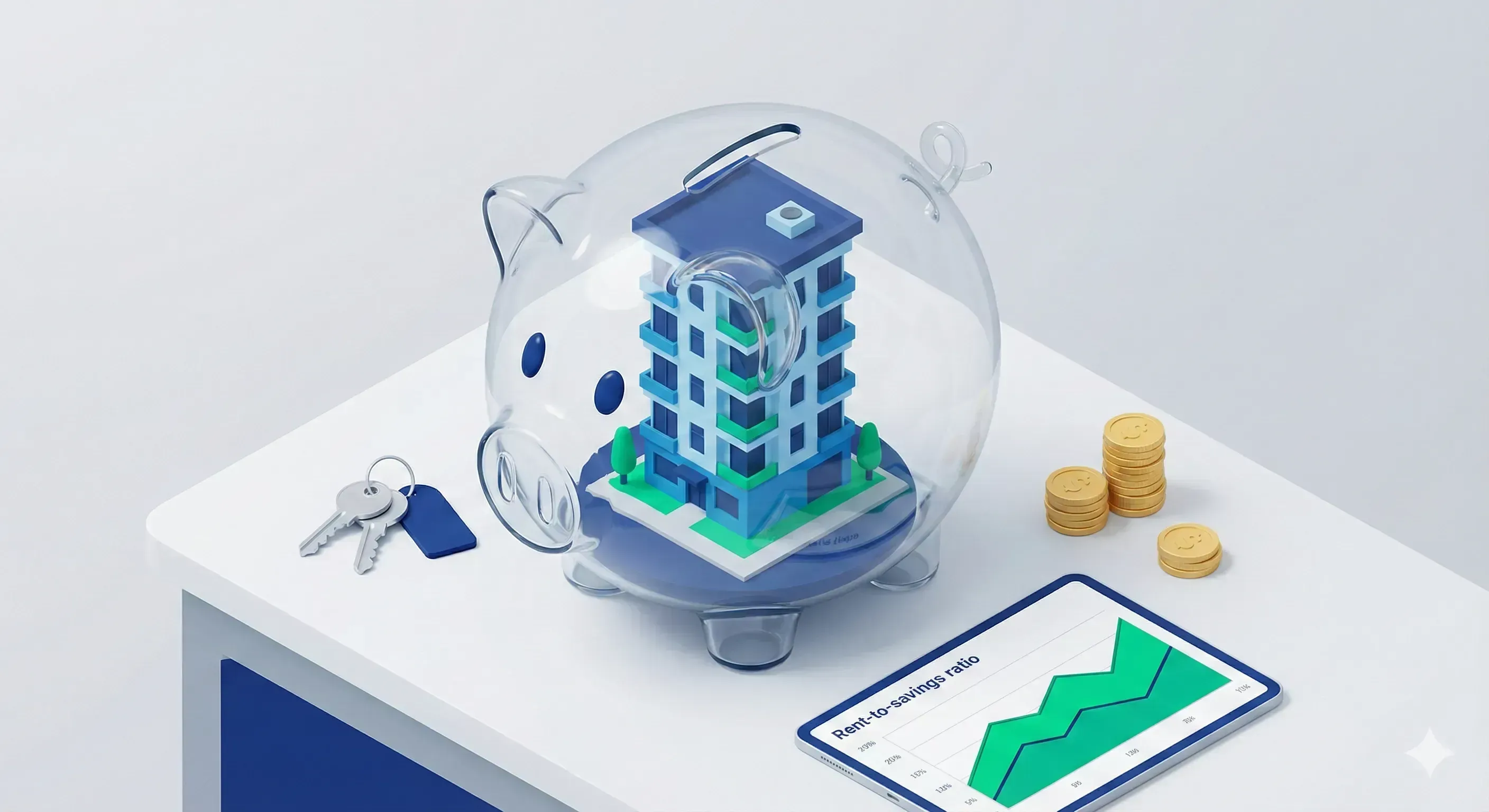
How to Organize Personal Finances if You Live in a Rental
💡 Quick Tip
Renting requires specific financial management so you don't feel like money is slipping away. Learn to balance housing costs with your savings goals, manage utility expenses, and create a fund for your future home down payment.
The Challenge of Rent in the Budget
For many, rent is the largest expense of the month. The golden rule is that it should not exceed 30% or 35% of your net income. If your rent consumes 50%, your room for maneuver for saving and investment is drastically reduced, forcing you to be extremely efficient in all other categories.
Strategies for Smart Tenants
- Deposit and Moving Fund: You should always have the equivalent of 2 or 3 months' rent saved. If you have to move urgently, you will need immediate liquidity for the new place's deposit.
- Preventive Maintenance: While major repairs are paid by the landlord, small breakages are usually the tenant's responsibility. Have a small monthly allocation for this.
- Utility Optimization: While you may not be able to change the windows, you can sign up for cheaper electricity rates or use weather stripping to save on heating.
Is Renting Throwing Money Away?
It is a common financial myth. Renting gives you flexibility and frees you from expenses like property taxes, community fees, or major building repairs. If you use that "savings" from ownership costs to invest in other assets, your wealth can grow as much or more than by buying a house. The secret is not to spend that difference on consumption.
Saving for the Future Purchase
If your goal is to buy in 5 years, your budget must treat the "down payment savings" as just another mandatory bill. Automate that amount every month so that rent doesn't "eat" your long-term ownership dreams.
📊 Practical Example
Imagine you earn $2,000 net and pay $700 in rent. Your utilities (electricity, water, internet) total $150. Your total housing cost is $850 (42.5%). To balance this, you decide to reduce transportation and leisure expenses to $400 total. This leaves you with $750 free. From there, you decide that $500 goes straight to a savings account for a future home down payment and $250 for your emergency fund. In one year, while renting, you will have accumulated $6,000 for your future home without sacrificing your current stability.