Difference Between Saving and Investing: When to Take the Leap
💡 Quick Tip
To save or to multiply? Understanding the difference between saving and investing is crucial for your financial future. Learn to identify when you have enough security to start investing and how to protect your money from inflation while building long-term wealth.
Saving vs. Investing: Key Concepts
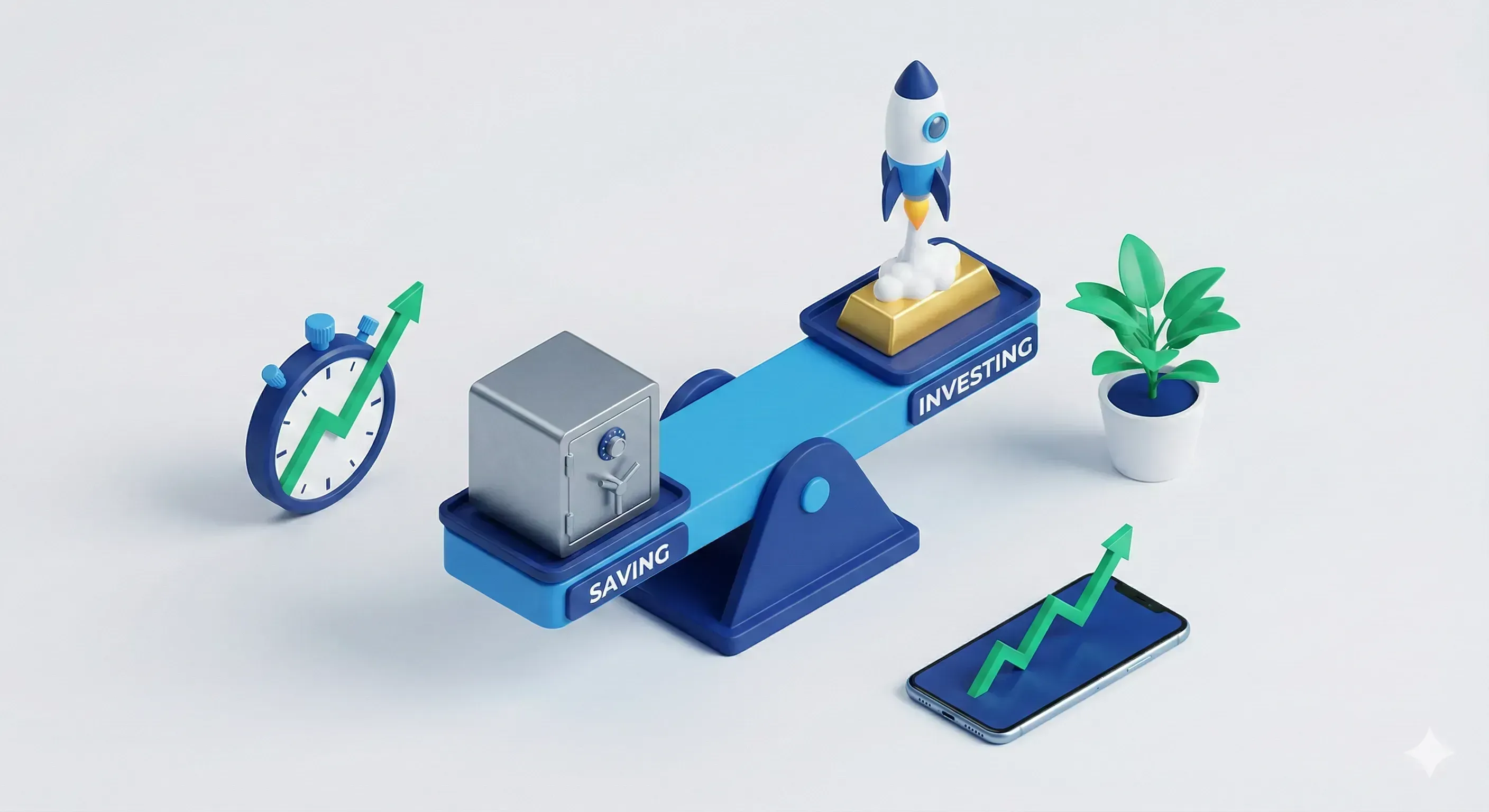
Saving is setting money aside today to use tomorrow. Its primary goal is security and immediate availability. Investing, on the other hand, is putting your money to work so it generates more money. Its goal is long-term growth, assuming some level of risk.
When Are You Ready to Invest?
You shouldn't invest money that you'll need to pay the rent next month. Before taking the leap, make sure you meet these three requirements:
- Zero Bad Debt: Don't invest if you have credit card debt with 20% interest. The investment return will hardly beat that cost.
- Full Emergency Fund: Have 3 to 6 months of your basic expenses saved in a checking or high-yield savings account.
- Money You Won't Need Soon: Only invest capital that you won't touch for at least the next 5 years.
The Risk of Only Saving
While saving seems the safest, it has an invisible enemy: inflation. If you leave $10,000 under the mattress for 10 years, you will still have $10,000, but you will be able to buy much less with it. Investing is the only way for your money to maintain or increase its purchasing power.
Starting Small
Nowadays, you don't need to be rich to invest. You can start with $50 a month in index funds. What matters is that saving is your security base and investing is your growth engine. Both are necessary and complementary in a healthy financial strategy.
📊 Practical Example
You have $5,000 in the bank. Your monthly expenses are $1,000. First, you secure your emergency fund by leaving $3,000 (3 months of expenses) in a savings account. You have $2,000 left. If you leave them saved at 0%, in 10 years they will be worth less. If you decide to invest them in an index fund with a historical average return of 7%, in 10 years those $2,000 will have turned into almost $4,000 without you doing anything else. Saving gave you the peace to sleep; investing gave you the profit.