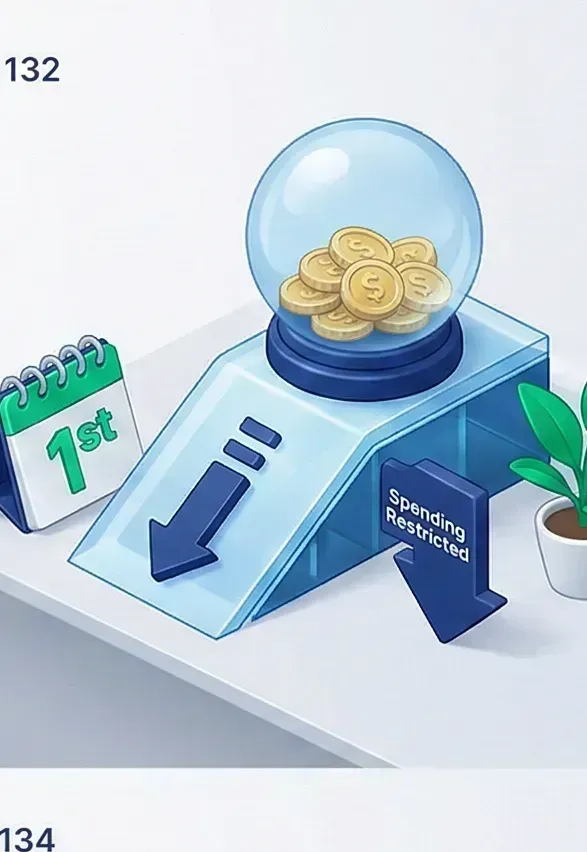
Reverse Snowball Method Applied to Monthly Savings
💡 Quick Tip
Flip your savings strategy. While traditional methods start small, the reverse snowball proposes saving as much as possible on day 1 of the month and adjusting later. Discover how the positive pressure of "seeing yourself with less" can skyrocket your ability to keep money.
Changing the Savings Order
Most people save "what is left" at the end of the month. The problem is we naturally spend what we see available. The reverse snowball method uses psychology: force yourself to live with less from minute one.
How to Execute it
- The Brave Saving: The day you get paid, transfer an "excessive" amount (e.g., 30%) to a separate account.
- The Restriction Month: Seeing less money, your brain enters "conscious saving" mode. You avoid whims because the budget feels tight.
- Safety Adjustment: If you reach the 25th and truly lack money for a bill, return a small portion of the savings to the main account.
Why it Works
It establishes a very low spending ceiling. It is easier to return $50 from savings if needed than to "find" $50 at the end of the month after spending it on dinners. Most months you won't need to rescue anything.
📊 Practical Example
You earn $1,500 net. Usually, you try to save $150 but fail. With the reverse snowball, on day 1 you transfer $450 (30%) to savings. You have $1,050 left for the month. Feeling "tight," you stop ordering takeout. If an emergency of $100 arises on the 26th, you rescue $100. At the end of the month, you saved $350. You saved $200 more than traditional methods simply by changing the order of factors.